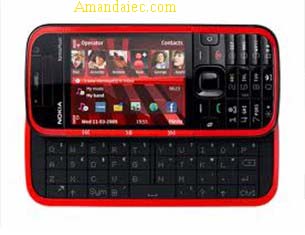
the development of NOKIA
Nokia Corporation is a Finnish multinational communications corporation that is headquartered in Keilaniemi, Espoo, and a city neighboring Finland's capital Helsinki. Nokia is engaged in the manufacturing of mobile devices and in converging Internet and communications industries
Nokia produces mobile devices for every major market segment and protocol, including GSM, CDMA, and W-CDMA (UMTS). Nokia offers Internet services such as applications, games, music, maps, media and messaging through its Ovi platform. Nokia's subsidiary Nokia Siemens Networks produces telecommunications network equipment, solutions and services. Nokia is also engaged in providing free digital map information and navigation services through its wholly owned subsidiary Navteq
Nokia is a public limited-liability company listed on the Helsinki, Frankfurt, and New York stock exchanges. Nokia plays a very large role in the economy of Finland; it is by far the largest Finnish company, accounting for about a third of the market capitalization of the Helsinki Stock Exchange (OMX Helsinki) as of 2007, a unique situation for an industrialized country. It is an important employer in Finland and several small companies have grown into large ones as its partners and subcontractors.
In 1987, Nokia introduced one of the world's first handheld phones, the Mobira Cityman 900 for NMT-900 networks
Nokia was one of the key developers of GSM (Global System for Mobile Communications), the second-generation mobile technology which could carry data as well as voice traffic. NMT (Nordic Mobile Telephony), the world's first mobile telephony standard that enabled international roaming, provided valuable experience for Nokia for its close participation in developing GSM, which was adopted in 1987 as the new European standard for digital mobile technology.
GSMs high-quality voice calls, easy international roaming and support for new services like text messaging (SMS) laid the foundations for a worldwide boom in mobile phone use. GSM came to dominate the world of mobile telephony in the 1990s, in mid-2008 accounting for about three billion mobile telephone subscribers in the world, with more than 700 mobile operators across 218 countries and territories. New connections are added at the rate of 15 per second, or 1.3 million per day
Mobile Phones is responsible for Nokia's portfolio of affordable mobile phones, as well as a range of services that people can access with them, headed by Mary T. McDowell.[125] This unit provides the general public with mobile voice and data products across a range of devices, including high-volume, consumer oriented mobile phones.